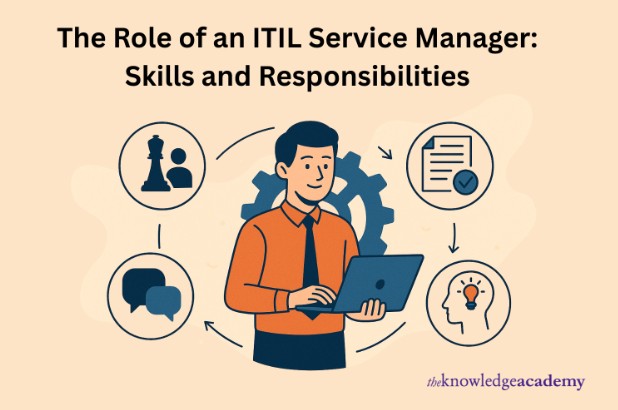
If you are considering ITIL Certification Training, you may already know how valuable ITIL is for shaping effective IT service delivery. Among the key roles within the framework, the ITIL Service Management plays an important part in ensuring smooth operations and aligning IT services with business goals. This role is not just about managing processes. It is about leading teams, solving problems, and driving service improvements. Understanding the skills and responsibilities involved will help you see why it is a desired position in modern organisations.
Why the ITIL Service Manager Role Matters Today
Almost every aspect of the company is supported by technology. IT systems run everything, from customer service to communication. However, what occurs when services perform poorly or systems malfunction? ITIL Service Manager becomes crucial in this situation. They ensure that IT services are dependable, effective, and tailored to the demands of the company.
The job of an ITIL Service Manager has become increasingly important. Professionals who can increase customer satisfaction and deliver reliable IT performance are now sought after by businesses. The ITIL Service Manager guarantees that IT directly supports organisational success. It is done by serving as a liaison between business executives and technical teams.
Core Responsibilities of an ITIL Service Manager
The duties of an ITIL service manager are numerous. They are responsible for operations, strategy, and improvement. Here are the main responsibilities of the same:
- Control the entire IT service lifecycle from design to delivery.
- Monitor performance metrics to ensure service quality.
- Lead Problem Management and incident to minimise downtime.
- Coordinate with teams to ensure processes are followed correctly.
- Drive service improvement to enhance the value of business.
Essential Skills Every ITIL Service Manager Needs
A combination of technical know-how and interpersonal abilities are essential for success in this position. Important abilities include:
- Communication Skills: Simplify technical words for those who are not technical.
- Leadership: Encourage and direct groups towards common service objectives.
- Solving Problems: To lessen the impact, promptly detect and resolve service difficulties.
- Analytical Thinking: Monitor performance and pinpoint opportunities for development using data.
- Customer Focus: Make sure that IT services complement company goals and the end-user experience.
The Link Between ITIL Service Manager and ITIL Framework
The ITIL framework offers a foundation for efficiently managing IT services. A service manager for ITIL makes this framework a reality. They guarantee that ITIL procedures are not only comprehended but also implemented in daily operations.
They make IT a partner rather than merely a support function by applying ITIL principles to match IT services with business needs. Their efforts guarantee that services are dependable, reasonably priced, and always evolving. The function is among the most valuable in IT service delivery because of the practical application of ITIL.
Challenges Faced by ITIL Service Managers
Although fulfilling, the position has its share of difficulties. Managers frequently deal with problems like:
- Balancing business demands with IT limitations.
- Keeping up with rapid changes in technology.
- Managing cross-functional teams with differing priorities.
- Ensuring compliance with industry standards and policies.
How ITIL Certification Training Prepares Future Service Managers
A solid understanding of ITIL practices is essential for the position of ITIL Service Manager. ITIL Certification Training becomes essential in this situation. Professionals that receive training are better implement the framework concepts in real-world situations because they have a practical understanding of it.
People who receive training become more confident in their ability to lead teams, manage service processes, and enhance corporate results. It is frequently seen as a first step for anyone hoping to advance into managerial roles in the provision of IT services.
Conclusion
Being an ITIL Service Manager is more than just another IT job. The way that companies use technology to service clients and accomplish objectives is shaped by this career path. Professionals can access leadership possibilities and long-term development by becoming proficient in the duties and obligations of this role. To develop a successful future in IT service delivery, The Knowledge Academy provides a path through expert-led courses and recognised training.