Indoor humidity is something most homeowners ignore until something goes wrong. But the moisture level in your air directly affects comfort, health, and the efficiency of your HVAC system. If you’ve been asking what the indoor humidity is in summer, the answer has real consequences for your home and the people in it. For persistent humidity issues, https://affordablehvacpa.com/services/air-quality/ offers professional air quality assessments that go beyond basic thermostat adjustments.
The Science Behind Indoor Humidity and Why It Matters
Relative humidity (RH) measures water vapor in the air as a percentage of its maximum capacity at a given temperature. Human comfort, biological activity, and building materials all respond differently depending on where that number lands. When indoor humidity in summer rises above 60%, the air feels heavy and oppressive even at normal temperatures. Your body’s natural cooling mechanism — sweating — stops working efficiently because moisture can’t evaporate from the skin.
What the Experts Recommend for Ideal Indoor Humidity in Summer
Many homeowners ask, what is the best indoor humidity level in summer when trying to improve comfort and reduce cooling costs. The EPA and ASHRAE both recommend keeping indoor humidity between 40% and 60% RH, with a tighter target of 45–55% for optimal health and comfort.
| RH Level | Effect |
| Below 30% | Dry air, irritated sinuses, static electricity |
| 40–55% | Ideal comfort zone |
| Above 60% | Mold risk begins, reduced cooling comfort |
| Above 70% | Serious health and structural risk |
Your AC naturally removes some humidity as it cools, but many systems aren’t sized or configured to handle it on their own — especially in high-moisture climates.
Health and Structural Risks of High Indoor Humidity
Health risks: mold and mildew growth (which triggers asthma and allergies), increased dust mite populations, greater survival of bacteria and viruses in the air, and heat fatigue from impaired sweating.
Structural risks: wood warping and rotting, paint peeling, condensation forming on cold surfaces, and insulation becoming saturated and losing effectiveness.
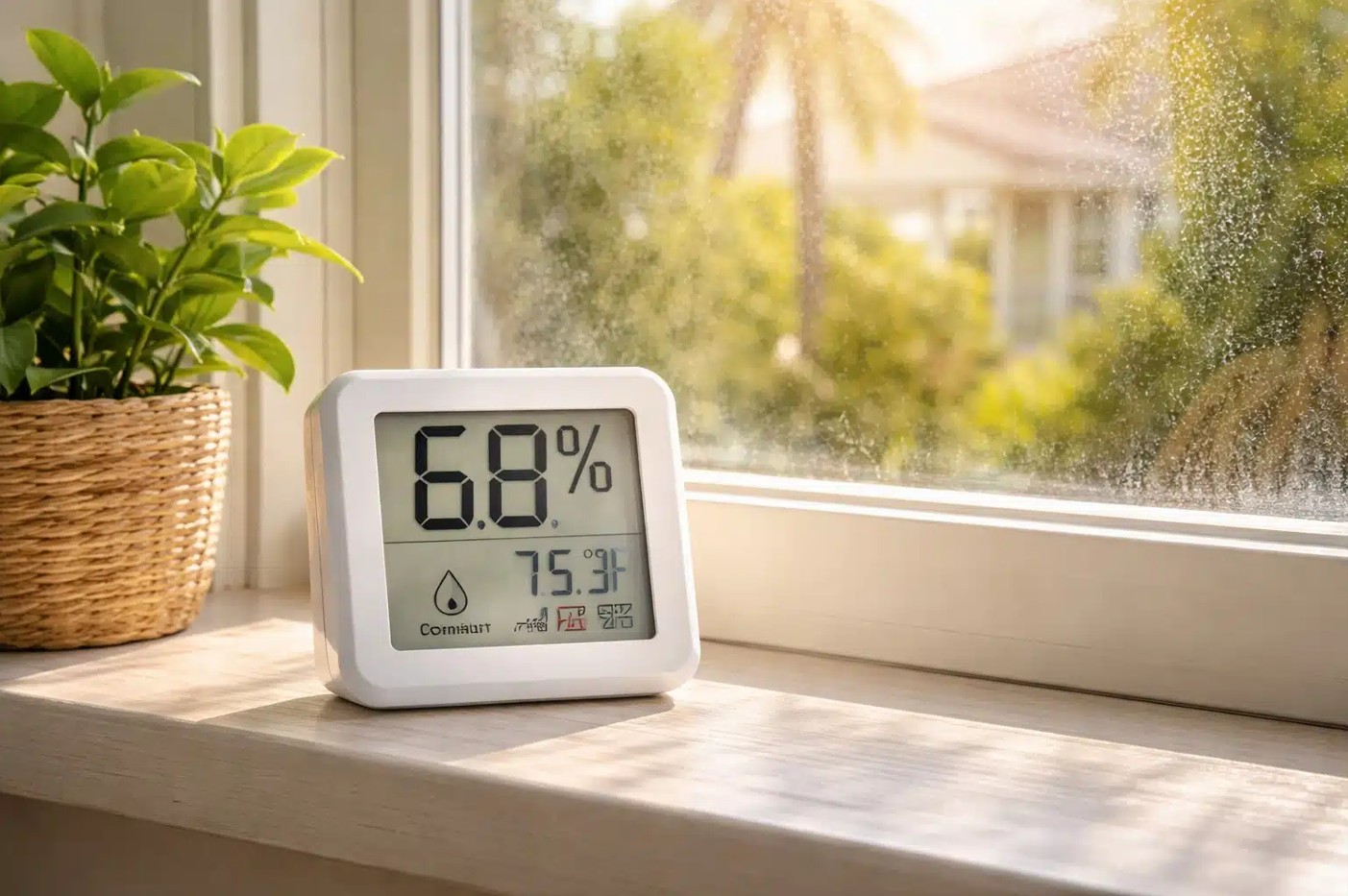
A basic hygrometer — $10–$20 at any hardware store — lets you monitor RH levels daily and catch problems before they escalate.
Practical Ways to Lower Indoor Humidity Without Expensive Equipment
If you’re wondering how to lower indoor humidity in summer, start with these practical steps:
- Run bathroom and kitchen exhaust fans consistently — Leave the bathroom fan on for 20 minutes after every shower
- Set the AC fan to “auto,” not “on” — Continuous fan operation recirculates moisture from the drain pan back into the air
- Use a portable dehumidifier — Units for 500–1,000 sq. ft. cost $150–$300 and work independently of the HVAC system
- Seal air leaks — Gaps around windows and doors allow humid outdoor air to constantly infiltrate
- Avoid air-drying laundry indoors — Wet clothes release significant moisture into living spaces
When the HVAC System Is the Root Cause of Humidity Problems
Sometimes the issue isn’t behavior — it’s the system itself:
- Oversized AC unit — Cools air too quickly and shuts off before completing the dehumidification cycle (short cycling)
- Dirty evaporator coil — Reduces the system’s capacity to condense moisture from the air
- Leaky ductwork — Pulls humid air from attics and crawl spaces and distributes it throughout the house
A whole-home dehumidifier integrated with the HVAC system is the most effective fix for homes in persistently humid climates.
Humidity vs. Temperature: Which Affects Comfort More?
Humidity wins. At 90°F and 90% RH, the heat index can exceed 110°F. At the same temperature with 40% RH, it feels manageable. Lowering indoor humidity by 10–15 percentage points can make a room feel 5–8 degrees cooler without touching the thermostat — a meaningful energy savings opportunity for any homeowner.