
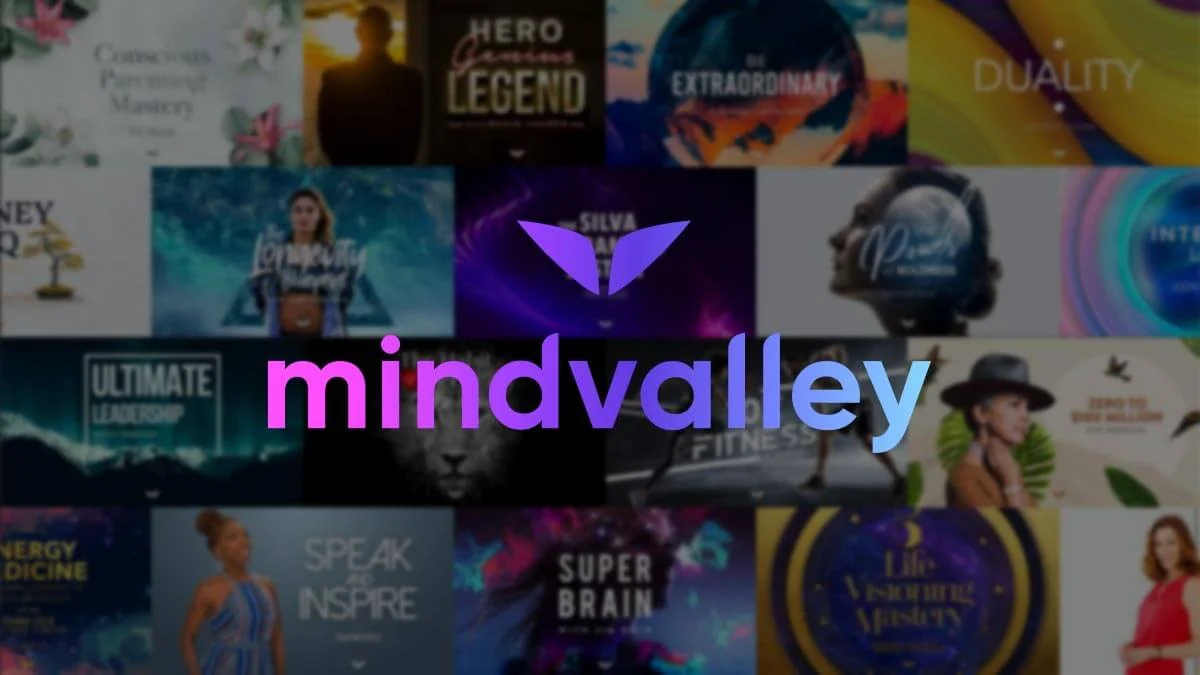
So, you’re seeing Mindvalley everywhere, right? The ads pop up, featuring charismatic speakers and promising to change your life. It makes you stop and think, “Is this for real?” It’s a valid question. When a company promises huge personal transformations, a healthy dose of skepticism is a good thing. You want to know what you’re getting into before you hand over your credit card details. That’s why I decided to go past the marketing fluff and do a serious deep dive similar to this Mindvalley review. We’re going to look at everything—the good, the bad, and the stuff they don’t put in the ads—to figure out if Mindvalley is a legitimate company worth your time and money.
The Man Behind the Mission: Vishen Lakhiani
First things first, you can’t really talk about Mindvalley without talking about its founder, Vishen Lakhiani. He’s a pretty compelling guy, and his personal story is baked into the very fabric of the Mindvalley brand. Originally an engineer, Lakhiani found himself in a high-stress Silicon Valley job that left him feeling completely burned out. This led him down a path of meditation and personal growth, which started as a passion and eventually snowballed into the huge online learning platform we see today.
What was his big idea? Lakhiani wanted to create a new kind of schooling, something that focuses on what he terms “transformational learning.” Essentially, it’s all the life skills you probably didn’t pick up in traditional education—things like building emotional resilience, understanding your own mind, or becoming a more conscious parent. He’s not just the founder; he’s the face of the company, having authored books and become a major voice in the personal development world.
Mindvalley’s Offerings: The Good, The Bad, and The Famous
Mindvalley’s course library is enormous, covering a wild range of topics from speed reading to what they call energy healing. So, let’s get down to brass tacks and see what you’re actually getting.
The Bright Side: High-Quality Content and Celebrity Instructors
You have to give them credit for one thing: Mindvalley’s production quality is top-notch. The courses look great, the website is easy to use, and the information is presented in a really professional way. They’ve also managed to get some heavy hitters from the self-help world to teach for them. I’m talking about people like Jim Kwik, the well-known brain coach; Marisa Peer, a celebrated therapist; and Ken Honda, Japan’s “zen millionaire.” These aren’t random people; they’re respected experts, and their presence definitely adds a layer of credibility.
Some of the courses that people seem to genuinely love are:
- “Superbrain” with Jim Kwik: People often rave about this one for its practical, easy-to-use techniques for boosting memory and learning faster.
- “Uncompromised Life” with Marisa Peer: Given Peer’s reputation as a therapist, it’s no surprise that her course on building solid self-confidence gets a lot of positive shout-outs.
- “The Silva Ultramind System”: This is a modernized version of a classic program about intuition and manifestation, originally developed by José Silva.
The way they structure the courses into daily “Quests” is pretty smart too. It feeds you the material in small, manageable chunks, which can make it a lot easier to stick with the program and build a real learning habit.
The Not-So-Bright Side: A Look at the Less Impressive Courses
Now, for the flip side. While some courses are solid, others get criticized for being all sizzle and no steak. You’ll find users who say that some courses are filled with fluff and that you could find similar, if not better, information for free on places like YouTube or in a library book. It really feels like a mixed bag. You might find a gem, but you could also end up paying a premium for slick packaging around some pretty basic concepts. The quality just isn’t consistent across the board.
The Elephant in the Room: Negative Reviews and Customer Complaints
Alright, let’s get into the messy stuff—the negative reviews. You don’t have to dig very deep on sites like Reddit or YouTube to find a chorus of unhappy customers. These aren’t just isolated incidents; you start to see the same complaints pop up over and over again.
The Refund Runaround
This is a big one. Mindvalley promotes a 15-day money-back guarantee, which sounds reassuring, doesn’t it? But a whole lot of people have found that getting that refund is a real uphill battle. What’s the story? People report that customer service is slow to respond, that they get stuck in loops with automated emails, and that they sometimes have to go to their bank and file a chargeback just to see their money again. I stumbled upon a Reddit thread where one user laid out their entire frustrating saga of being repeatedly charged after they had canceled their subscription, and the comment section was filled with people saying, “Yep, me too.”
Aggressive Marketing and ‘Cult-like’ Accusations
Mindvalley’s marketing style also rubs a lot of people the wrong way. They lean heavily on high-pressure tactics. Think countdown timers telling you an offer is about to disappear, a barrage of promotional emails, and a general sense of urgency. This approach can feel pretty relentless and has led more than a few people to label the company as “scammy.”
Then there’s the whole “cult-like” vibe that people mention. Where does that come from? It seems to be a combination of the intense focus on Vishen Lakhiani as a sort of modern-day guru and the passionate, almost devotional, way some followers talk about the platform. For people who are just looking for some straightforward self-help tips, this can be a major turn-off. They don’t want to feel like they’re joining a movement; they just want to learn a new skill.
The “Scam” Allegation
So, let’s tackle that loaded word: is Mindvalley a scam? It gets thrown around a lot in those angry reviews. From all my digging, I’d say no, not in the legal sense. They do deliver a product, and for many, it’s a valuable one. The problem is that their business practices—the hard-sell marketing and the nightmare refund process—can leave a very sour taste in your mouth. When a customer feels cheated, whether by the product or the process, they’re going to feel scammed. It’s a case where the company’s actions don’t quite match the enlightened image they project.
Behind the Curtain: A Glimpse into Mindvalley’s Inner Workings
What’s it like working on the inside? That can tell you a lot about a company. Employee reviews on Glassdoor really paint a two-sided picture of Mindvalley. On one side, you have employees who are passionate about the mission. They talk about a creative work environment, talented colleagues, and the satisfaction of being part of something that aims to do good in the world.
But then there’s the other side. You’ll find former employees who bring up some serious issues. They talk about grueling hours, a high-pressure atmosphere, and a “cliquey” internal culture. Some reviews suggest there’s a big gap between the company’s external brand of mindful, balanced living and the actual day-to-day work experience. It seems the “transformation” they advertise might not always apply to their own staff.
Legal Troubles and a Failing Grade
Beyond what customers and employees are saying, there are some other official red flags that are hard to overlook.
Lawsuits and Investigations
Right now, Mindvalley is facing a class-action investigation over how it handles subscription renewals. The core of the issue is whether the company automatically renews subscriptions without getting clear consent from customers—which, as we’ve seen, is a huge source of complaints. On top of that, there’s a lawsuit that alleges Mindvalley illegally sold its users’ viewing histories to third-party companies like Facebook. These aren’t minor slip-ups; they’re serious allegations that cast a shadow on the company’s ethics.
An ‘F’ from the Better Business Bureau
The Better Business Bureau, or BBB, is a go-to for checking up on a company’s reputation. Mindvalley currently holds an “F” rating from the BBB and it’s not an accredited business. Why the failing grade? The BBB page shows a clear pattern of complaints, mostly about billing and customer service issues. Crucially, it notes that many of these complaints have gone unanswered by the company. That’s a pretty clear sign that Mindvalley is struggling to keep its customers happy.
So, Is Mindvalley a Legitimate Company?
After wading through all this information, where do we land on the big question? Is Mindvalley legit? It’s not a straightforward yes or no, is it?
You can’t deny that they produce some excellent, high-quality courses with genuine experts. There are plenty of people who have had wonderful experiences and feel their lives have improved because of the platform. They’ve built a massive community and have certainly pushed personal growth into the mainstream conversation.
But you just can’t ignore the dark side. The mountain of complaints about customer service, the refund debacles, and the questionable billing practices are serious problems. Throw in the legal troubles and that dismal BBB rating, and the picture gets even cloudier. It looks like Mindvalley has mastered the art of creating and selling a dream, but they’ve fumbled the ball on the basic, day-to-day business of keeping their customers supported and satisfied.
My Final Thoughts
So, what’s the bottom line? I see Mindvalley as a company with a brilliant concept that’s being dragged down by some pretty significant operational flaws. They are masters of content creation and marketing. If you’re a self-starter and you find a specific course that speaks to you, you could absolutely get your money’s worth.
You just have to walk in with both eyes wide open. Know that if something goes wrong, you might be in for a customer service headache. Double-check those subscription settings so you don’t get a surprise charge. If you’re working with a tight budget or you’re not a fan of that rah-rah, guru-centric style of self-help, you might be better off exploring other options.
In the end, it’s your call. My aim here was simply to lay all the cards on the table—the good, the bad, and the just plain frustrating—so you can make a choice that’s right for you. There are countless ways to work on yourself, and many of them come with fewer red flags and a better customer service track record. Do your homework, listen to your gut, and invest in the path that feels most authentic to you.
